Four Decades: Ron Geibert

Academic Year
2018-19
Date(s)
-
Location
Robert and Elaine Stein Galleries
Ticket info
No tickets required

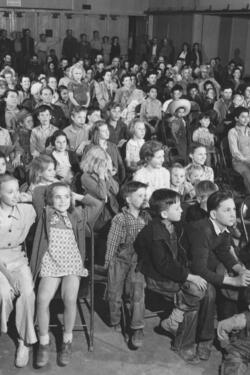
FOUR DECADES is a retrospective of works created by Wright State art professor emeritus Ron Geibert, featuring color street photography, installations, Orwellian prints, and electronic kiosks, and complemented with historical photographs and collection highlights. Among the exhibition are photographic artworks added to Wright State’s permanent collection from the dozen shows curated by Geibert from 1986 to 2007. FOUR DECADES also extends its reach back in history with a reshowing of the exhibition The Celebrative Spirit: 1937–1943. This 1986 exhibition combines rarely seen photographs of community spirit from the Library of Congress and other associated archives, and a 1997 CD-ROM with rare video and audio components, to illustrate the role of social and recreational events during the Great Depression. Interpretative text by noted Farm Security Administration historian F. Jack Hurley on 10 photographers employed by the FSA during the Roosevelt Presidency provides a balance between the known and the speculated.

Support for this FotoFocus Biennial 2018 exhibition was provided by FotoFocus and the Ohio Arts Council.

From August 29–October 21, 2018

Featuring

Speakers

Biography:

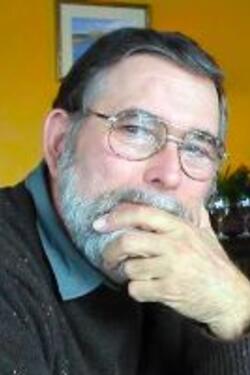
Wright State Professor Emeritus Ron Geibert (b.1952) worked in the documentary photography tradition his first 20 years, resulting in the 1992 DAI book From the Midwest. Since then he has explored Orwellian issues with installations and computer technology, as well as prints that address the role of printed books in today’s digital world. His works are found in significant collections including the Museum of Modern Art (NYC), the Smithsonian, Library of Congress, Corcoran (Washington, D.C.), the San Francisco Museum of Modern Art, the Center for Creative Photography (Tucson, AZ), the Tokyo Metropolitan Museum of Photography, and the Bibliothèque Nationale (Paris).

As an author, curator, publisher, and artist he has produced 20 publications and portfolios. Accomplishments of particular merit are his groundbreaking photographic work in color in the 1970s and 1980s, scholarship on the photography by Wilbur and Orville Wright, creation and production of one of the earliest commercially published CD-ROMs of contemporary art photography exhibitions, and an extensive suite of interactive electronic kiosks that speak to private and public issues found in the Information Age.

Links

Biography:

The University of Memphis Professor of History Emeritus F. Jack Hurley was awarded the Lyndhurst Prize 1990—an unrestricted award of $40,000 per year for three years in recognition of creative and significant work in American Social/Cultural History. His books include:

Portrait of a Decade: Roy Stryker and the Development of Documentary Photography in the Thirties, LSU Press, Baton Rouge, 1972.

Russell Lee: Photographer, Morgan and Morgan, Inc., Dobbs Ferry, New York, 1978.

Marion Post Wolcott: A Photographic Journey, Albuquerque, University of New Mexico Press, 1989.

Folder
Art Galleries

Exhibitions

Biography:

A retrospective showing featuring color street photography, installations, Orwellian prints, and electronic kiosks and complemented with historical photographs and collection highlights.

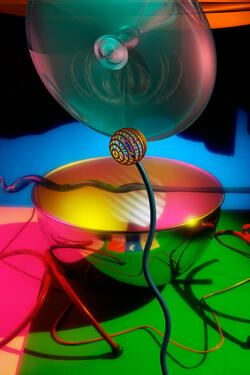
It is common for artists to work with a particular theme, problem, or issue for long periods. For instance, photographer Ron Geibert was a color documentarian for 20 years, experimented with installation art for several years, and then with multimedia and Orwellian issues on deception in language and the oversaturation of stimuli for another 20. Sometimes, though, one can find oneself exploring revised ideas, new ideas, and old ideas at the same time. Recently he has expanded his exploration of books started in 2004, briefly returned to using a camera and darkroom, next an iPhone, and then used obsolete software to create modified versions of electronic kiosks created from 1995 to 2003.

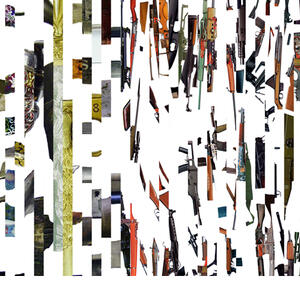
CHANGE. It usually arrives in unexpected ways and is faced with little enthusiasm. But there are times when it is sought out and thoroughly engaged. This has been the case with Geibert. Acknowledging that the printed book is perhaps an instrument destined for obsolescence, his plates nevertheless take the viewer on a visual tour of the beauty and beguiling power of images and text found within the pages. His panoramic “sliver” prints are a return to ideas from 2007—but now illustrating information conveyed more by bits and pieces in the digital age. Traditional silver prints provide a brief return to his undergraduate days and panoramic inkjet prints using an iPhone with the ideas discovered in his “sliver” exploration.

Biography:

A reshowing of a 1986 exhibition, and the 1997 CD-ROM with rare video and audio components, illustrating the role of social and recreational events during the Great Depression.

In 1935, the Roosevelt Administration took steps to illustrate to Congress and the American people the success of their fight against rural poverty. One of the most influential efforts of documentation was a photographic program under the Farm Security Administration, now commonly called the FSA Project. According to Director Roy Stryker, “what we ended up with was as well-rounded a picture of American life during that period as anyone could get.” Stryker had asked that the photographers keep in mind “that the purpose is to show that the residents are leading normal, settled lives. The families eat, sleep, work, laugh, raise children, gossip, picnic, read books, and wash clothes.”

Archives preserve the past, inform the present, and affect the future. The Celebrative Spirit: 1937–1943 illustrates a country depending upon social and recreational events to boost the spirit of their communities. Collections allow for the learning from, the interpretation of, and the adaption to life over multiple generations and situations. For most, the FSA project is ancient history, but, for others, it is a source for reflection while encountering similar events or challenges in their own lives. Collections can, unfortunately, also be abused with the rewriting of history using different rules and criteria.

We will use the expertise of noted FSA historian F. Jack Hurley to provide a balance between the known and the speculated since he, among historians, had the most contact with the FSA photographers 45 years ago and during the decades that followed.

Biography:

Photographic artworks added to the Wright State University permanent collection from the dozen shows curated by Professor Emeritus Ron Geibert from 1986 to 2007.

During his 27-year career at Wright State University, Professor Emeritus Ron Geibert curated over a dozen exhibitions that resulted in publications and/or additions for the school’s permanent collection. Among the listings was PARENTS, which bore witness to the profundity of that first and possibly foremost relationship in our lives: that which we share with our parents; and Water Being Water, featuring David Goldes, a scientist turned artist using the simplest of elements—H2O. Also of particular merit was the use of the latest in technology at that time—the CD-ROM—to inform audiences about the arts. In 1994, Geibert’s The New Street Photography was among the earliest CD-ROM publications about photography. As a freelance producer, Geibert and digital EDITIONS Dayton published a 1997 CD-ROM on the FSA period, followed by one that examined competition among youth in the United States and Japan.

Perhaps the most significant undertakings, though, were the Kodak-sponsored Photography in the 1990s: Fifty Portfolios and Photography Now: One Hundred Portfolios electronic publications. Each was the result of works submitted from around the world—the first culled from submissions by 500 artists from 30 countries and the second from nearly 1,300 photographers representing 60 countries. Each made use of jury panels composed of distinguished curators from Germany, Japan, France, and New York, Houston, Chicago, and Washington, D.C.

Folder
Art Galleries

All Gallery events are free and open to the public. Visitor parking areas on campus are free, and parking at the Creative Arts Center is unrestricted on weekends. A dedicated parking space for galleries patrons is available in Lot 13. For more information, please contact the galleries at (937) 775-2978 or visit wright.edu/artgalleries